Moving to Center City Philadelphia: What Every First-Timer Should Know
Center City is Philadelphia's most densely built, most logistically demanding moving environment. High-rises, loading docks, COI requirements, parking restrictions — here's what to expect and how to navigate all of it before move day.
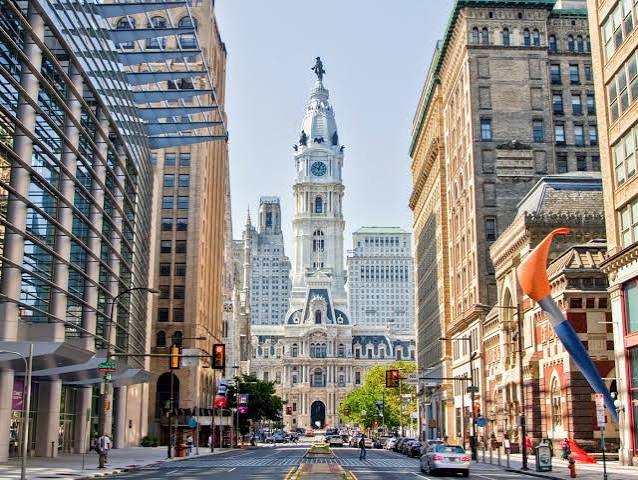
Center City is the most logistically demanding moving environment in Philadelphia. The density, the building management requirements, the parking restrictions, and the access coordination that high-rise moves require add up to a move-day complexity that's genuinely different from what you'd encounter moving into a rowhome in South Philly or a house in the Northeast. If you're moving to Center City for the first time, this guide covers what to expect and how to handle each piece of it.
What Makes Center City Moves Different
High-Rise Buildings and Freight Elevators
The majority of Center City apartment buildings are mid- and high-rise structures with managed access. Unlike rowhomes, where the path from the truck to your front door is direct, a Center City high-rise move typically involves a loading dock or service entrance, a freight elevator that must be reserved in advance, and building-specific rules about move hours, crew size, and what can travel through common areas.
Freight elevators in Center City buildings are large enough to handle most furniture, but they run on reservation systems — often 2–4 hour windows — and in peak season those windows fill weeks out. This is the most time-sensitive booking item in a Center City move. Get your freight elevator slot before you confirm your move date, not after.
Building Move-In Windows
Most Center City buildings restrict moves to specific hours. Weekdays only is common. Saturday mornings sometimes available. Sunday moves are frequently prohibited entirely. Move windows typically run 9 AM to 5 PM, though some buildings allow earlier starts. These restrictions exist to protect other residents and common areas — they're enforced, and showing up outside the permitted window means your crew waits.
When you confirm a date with Moverama, be sure to let us know if your buildings have restricted moving hours. Everything else in the schedule builds around that window.
Certificate of Insurance
Nearly every managed building in Center City requires a COI from your moving company before allowing the move to proceed. Moverama's COI is ready to provide at booking. Many Center City buildings require specific language — named insured wording, additional insured designations, specific coverage minimums. Get the building's COI requirements from your property manager and share them with us when you book. Our insurance agent will furnish the certificate exactly as required. This process takes a few days — don't leave it for the week before your move.
Parking for the Moving Truck
Center City has some of the most restricted and competitive parking in Philadelphia. Many blocks are permit-only, metered, or simply have no available space for a large moving truck. The best-case scenario for a Center City move is a building with a designated loading dock — many high-rises have them, and your crew can work directly from the dock rather than from a street parking spot.
If your building doesn't have a loading dock, apply for a Temporary No Parking Permit well in advance. In Center City, apply at least 10 days out — 2 weeks is better. Post signs 72 hours before the permit takes effect. The night before your move, park your own car, a neighbor's car, or place some trash cans in the reserved zone to physically hold the space. Talk to your building's concierge or front desk about the best approach for truck access at your specific address.
Center City Neighborhoods: What to Know About Each
Rittenhouse Square and Graduate Hospital
Rittenhouse Square is among the most desirable addresses in Philadelphia. The immediate blocks around the square feature some of the city's most elegant older apartment buildings — pre-war construction with formal lobbies, service elevators, and building staff who take the move-in process seriously. COI requirements here are standard and often specific. Move-in windows are enforced. The buildings tend to be well-maintained and well-managed, which means the process is predictable if you follow it.
Graduate Hospital, just south of Rittenhouse, is a mix of converted rowhomes and newer construction. Access logistics vary considerably by building type. Newer managed buildings will follow the same COI and freight elevator pattern as larger Rittenhouse buildings; rowhome conversions follow the same narrow-stairwell logic as the rest of Philadelphia's older housing stock.
Old City and Society Hill
Old City and Society Hill have some of Philadelphia's oldest buildings alongside newer loft conversions and condos. Historic buildings in these neighborhoods often have older elevator systems or limited loading dock access. Confirm elevator dimensions before your move — not every building in Old City has a freight elevator large enough for a king bed frame or a large sofa. For some older buildings, hoisting through a window is occasionally necessary and can be handled on a case-by-case basis.
Logan Square and the Benjamin Franklin Parkway
The large apartment buildings along the Parkway corridor — many of them built in the mid-20th century or later — are generally well-equipped for moves with proper freight access and reasonable loading dock arrangements. The neighborhood is slightly less densely built than Rittenhouse, which helps with truck parking. Still apply for a permit — Parkway-adjacent blocks are controlled and metered.
Washington Square West and Midtown Village
This area is a mix of converted rowhouses, smaller apartment buildings, and some newer mid-rise construction. The rowhome conversions here are narrow in the characteristic Philadelphia way — stairwells require the same pre-planning as anywhere else in the city. Newer buildings will have standard managed building requirements. The neighborhood's density means parking permits are always worthwhile.
What to Confirm Before Move Day
"Center City moves are the most document-intensive moves we do. The COI, the freight elevator reservation, the move window, the move-in fee — there are more pieces to confirm in advance than for any other move type in Philadelphia. The customers who call us with all of this already sorted have a dramatically smoother experience than the ones who are finding it out as they go." — Moverama Team, based on 5,000+ Philadelphia moves
Frequently Asked Questions About Moving to Center City Philadelphia
Moving to Center City is more involved than most Philadelphia moves, but it's entirely manageable when you treat the building access logistics as the first thing to sort out rather than the last. Freight elevator, COI, move window, parking — get these confirmed early and everything else follows. Moverama has been moving people into Center City since 2017. When you're ready, get in touch here or call us directly at (215) 420-0305.